
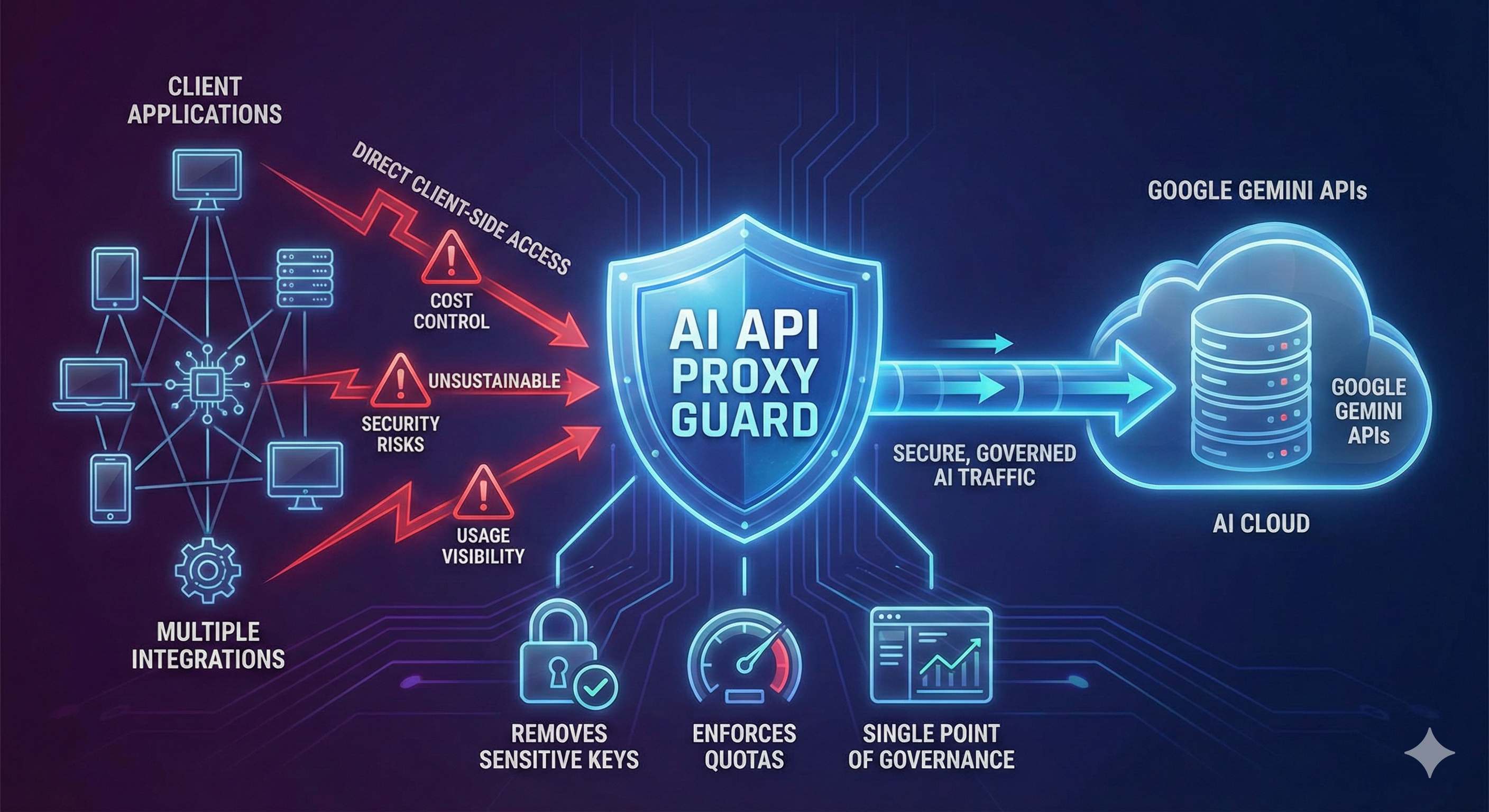
Teams experimenting with or deploying AI features often end up with scattered provider API keys, no central visibility on token spend, and little control over what prompts actually leave the organisation. Costs can spike without warning, keys get shared insecurely, and there is no simple place to add basic logging, rate limits or safety checks before requests hit OpenAI, Anthropic or other providers.
AI API Proxy Guard is a lightweight proxy that sits between your application and AI providers. It gives teams a single controlled endpoint, enforces basic budgets and rate limits, logs requests for auditability, and provides a clean place to add simple guardrails. Existing SDKs keep working, you just point them at the proxy instead of the provider directly.
Prototype / internal tool. Built by RETSA Group.
Used to give small teams predictable spend and basic control when experimenting with or shipping AI features, without building a full enterprise gateway.
Focused tool, not an over-engineered platform. Designed to solve the immediate problems of key sprawl, cost visibility and basic safety for teams that are not yet ready for a heavy enterprise AI gateway. Keeps the integration path deliberately simple.

Let's discuss how we can create a customised solution for your specific needs.
Get in Touch